
“Death Be Not Proud” by John Donne is a profound Holy Sonnet exploring mortality‚ faith‚ and the transience of death. Its timeless themes resonate deeply.
1.1 Overview of the Poem
John Donne’s Death Be Not Proud is a sonnet that challenges death’s perceived power‚ arguing it is not mighty or dreadful. Using Elizabethan English‚ Donne personifies death as a mere sleep‚ emphasizing its transient nature. The poem‚ part of the Holy Sonnets‚ reflects Donne’s spiritual and philosophical contemplation of mortality. Its central theme is the triumph of eternal life over death‚ resonating with readers through its profound exploration of faith and fear. This masterpiece remains a cornerstone of metaphysical poetry‚ offering timeless insights into human existence.
1.2 Historical Context of John Donne’s Work
John Donne wrote Death Be Not Proud during the late 16th to early 17th century‚ a period of religious upheaval and intellectual transformation in England. Donne‚ an Anglican priest‚ drew heavily from his spiritual struggles and the theological debates of his time. His metaphysical style‚ blending philosophy and religion‚ reflected the Renaissance humanism and the shifting cultural landscape. This historical context shaped his exploration of mortality‚ divine love‚ and the soul’s immortality‚ themes central to his Holy Sonnets.
1.3 Relevance of the Poem in Modern Times
Death Be Not Proud remains relevant today‚ offering timeless reflections on mortality and faith. In an era dominated by existential anxiety and secularism‚ Donne’s exploration of death as a natural transition resonates deeply. The poem’s themes of resilience‚ hope‚ and the triumph of eternal life provide solace and introspection. Its universal appeal continues to inspire modern readers‚ making it a vital work in contemporary literature and philosophical discourse.

John Donne and His Literary Significance
John Donne is celebrated as a leading figure in metaphysical poetry‚ known for his complex themes and intellectual depth. His unique style blends spirituality and philosophy‚ influencing centuries of writers and thinkers. Donne’s works‚ including Death Be Not Proud‚ remain central to literary studies‚ showcasing his mastery of language and exploration of human existence.
2.1 Biography of John Donne
John Donne (1572–1631) was a prominent English poet‚ satirist‚ and Anglican priest. Born in London to a Catholic family‚ he studied at Oxford and later pursued law. Donne’s career spanned government service and parliamentary roles before his ordination. His marriage to Anne More was initially secretive‚ leading to imprisonment. After her death‚ Donne devoted himself to theology‚ becoming Dean of St. Paul’s Cathedral. His writings‚ including Death Be Not Proud‚ reflect his spiritual evolution and intellectual depth‚ blending personal and philosophical themes.
2.2 His Role in Metaphysical Poetry
John Donne is a central figure in metaphysical poetry‚ known for his complex imagery‚ intellectual depth‚ and innovative use of conceits. His poetry often explores themes of love‚ religion‚ and mortality‚ blending secular and sacred ideas. Donne’s unique style‚ characterized by intricate metaphors and logical argumentation‚ influenced later poets like George Herbert and Andrew Marvell. His works challenged traditional poetic forms‚ establishing him as a pioneer in the metaphysical movement‚ which emphasizes philosophical and spiritual exploration.
2.3 Major Themes in His Works
John Donne’s poetry explores profound themes of love‚ spirituality‚ and mortality‚ reflecting his intellectual and emotional depth. His works often examine the divine‚ human frailty‚ and the interconnectedness of life and death. Donne’s personal experiences‚ including his conversion to Anglicanism‚ deeply influenced his writing‚ which frequently grapples with faith‚ sin‚ and redemption. His exploration of complex emotions and universal truths continues to resonate with readers‚ making his poetry timeless and thought-provoking.
The Holy Sonnets and Their Importance
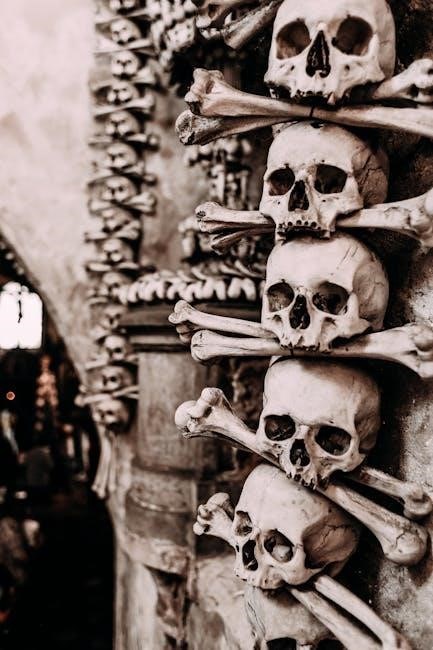
John Donne’s Holy Sonnets are deeply spiritual‚ exploring themes of divine love‚ mortality‚ and redemption. Their intricate structure and metaphysical themes showcase Donne’s literary genius‚ offering timeless reflections on faith and human existence.
3.1 Structure and Style of the Holy Sonnets
The Holy Sonnets‚ including “Death Be Not Proud‚” follow a traditional sonnet structure with 14 lines‚ often written in iambic pentameter. Donne employs a tight‚ disciplined form to explore profound themes‚ blending metaphysical imagery with emotional depth. His use of metaphor‚ wordplay‚ and paradox creates a rich‚ complex style that challenges readers. The sonnets’ structure reflects their spiritual intensity‚ with each line carefully crafted to convey theological and philosophical insights‚ showcasing Donne’s mastery of both form and content.
3.2 Religious and Philosophical Undertones
The Holy Sonnets‚ including “Death Be Not Proud‚” are deeply rooted in Christian theology‚ exploring themes of mortality‚ divine judgment‚ and redemption. Donne’s metaphysical approach intertwines religious devotion with philosophical inquiry‚ questioning the nature of death and eternity. His use of paradox and irony underscores the tension between human fear and divine assurance‚ reflecting his own spiritual struggles. These undertones resonate with readers‚ offering both solace and intellectual stimulation‚ making the sonnets timeless in their exploration of faith and existence.
3.4 “Death Be Not Proud” as Part of the Holy Sonnets
“Death Be Not Proud” stands as a prominent piece within John Donne’s Holy Sonnets‚ a collection of poems exploring spiritual themes. The sonnet exemplifies Donne’s mastery of metaphysical poetry‚ blending intellectual rigor with emotional depth. Its placement within the Holy Sonnets underscores its thematic alignment with other works in the collection‚ which collectively grapple with mortality‚ divine mercy‚ and the soul’s journey. This poem‚ in particular‚ reflects Donne’s personal faith and philosophical contemplation‚ making it a cornerstone of the Holy Sonnets.

Key Themes in “Death Be Not Proud”
The poem explores death’s personification‚ mortality’s inevitability‚ and the tension between faith and fear‚ offering profound insights into human existence and divine assurance.
4.1 The Personification of Death
In “Death Be Not Proud‚” Donne masterfully personifies death‚ portraying it as a arrogant yet powerless entity. He strips death of its intimidating aura‚ likening it to a mere servant of fate‚ chance‚ and human actions. Donne challenges death’s perceived dominance‚ emphasizing its limitations and lack of true power. This bold personification underscores the poem’s central theme of mortality while diminishing death’s fearsome reputation‚ fostering a sense of control and reassurance for the reader.
4.2 The Concept of Mortality
Donne approaches mortality with philosophical depth‚ presenting death as an inherent part of life’s cycle. He challenges the fear of death by framing it as a natural transition‚ not an end. Through his metaphysical lens‚ Donne suggests that death’s power is an illusion‚ emphasizing that true eternity lies in the soul. This perspective encourages acceptance and preparation for death‚ rather than dread‚ aligning with his Christian beliefs in an afterlife and divine judgment.
4.3 The Interplay of Faith and Fear
Donne masterfully explores the tension between faith and fear‚ using religious conviction to diminish death’s intimidation. He argues that fear of death stems from a lack of faith in eternal life. By asserting that death is merely a “slave to fate‚ chance‚ kings‚ and desperate men‚” Donne diminishes its power‚ emphasizing divine control. This interplay reinforces the idea that true strength lies in faith‚ not fear‚ offering comfort and reassurance to believers confronting mortality.

Poetic Devices and Literary Techniques
Donne employs personification‚ metaphors‚ and paradox to challenge death’s authority‚ using irony to diminish its power. His intricate imagery and rhetorical questions reinforce his philosophical arguments‚ creating depth.
5.1 Use of Metaphor and Simile
Donne masterfully uses metaphors and similes to diminish death’s grandeur‚ likening it to a “slave” and “substance” rather than a fearsome entity. His metaphors‚ such as death as a “short sleep‚” reduce its intimidation. Similes like death being “not mighty” challenge its power‚ emphasizing its limitations. These literary devices create vivid imagery‚ reinforcing the poem’s central argument that death is merely a transition‚ not an end‚ thus undermining its formidable reputation in human perception.
5.2 The Role of Irony in the Poem
Donne employs irony to challenge death’s perceived omnipotence‚ calling it a “slave to fate” and a “porter” rather than a formidable force. This ironic tone diminishes death’s intimidation‚ highlighting its subservience to higher powers. By labeling death as “mighty and dreadful” yet powerless‚ Donne uses irony to expose its limitations. This rhetorical strategy underscores the poem’s central message‚ reducing death’s fearsome image to a mere transition‚ thus emphasizing its lack of true authority over human existence and divine will.
5.3 Rhetorical Strategies Employed
Donne’s “Death Be Not Proud” masterfully employs rhetorical strategies to convey its themes. He uses metaphors‚ such as comparing death to a “slave to fate‚” to diminish its power. Allusions to Christian theology‚ like the afterlife‚ reinforce his argument. Paradoxes‚ such as death being “mighty and dreadful” yet powerless‚ highlight its limitations. These strategies create a persuasive argument‚ challenging death’s authority and emphasizing its role as a mere transition to eternal life. Donne’s rhetoric underscores the poem’s philosophical depth and emotional resonance.
The Poem’s Message and Philosophy
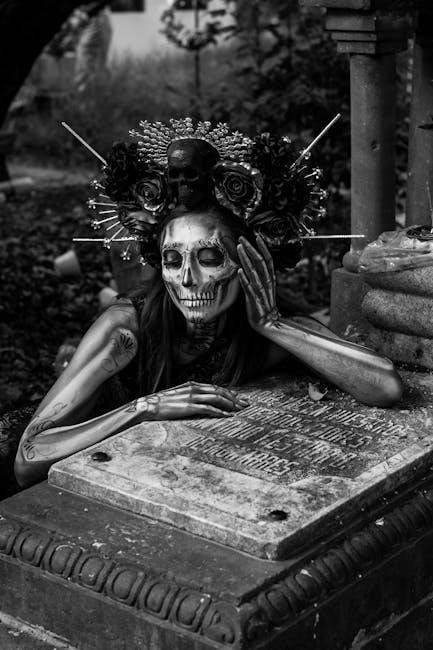
The poem defies death’s authority‚ presenting it as a mere transition to eternal life‚ blending Christian theology with metaphysical philosophy to challenge mortal fears.
6.1 Challenging the Notion of Death’s Power
Donne challenges death’s authority by portraying it as a mere illusion of power. He argues that death is not an end but a transformation‚ stripping it of its fearsome reputation. Through bold imagery and logical reasoning‚ Donne diminishes death’s might‚ suggesting it is merely a “short sleep” before eternal life. This perspective not only comforts the living but also redefines mortality‚ emphasizing that death’s power is an illusion‚ and true might lies with divine eternity.
6.2 The Idea of Death as a Transition
Donne presents death not as an end but as a transition to eternal life. He uses the metaphor of sleep to convey that death is temporary‚ a “short sleep” before awakening in eternity. This perspective reassures the living‚ transforming death from a feared event into a natural process. By framing death as a transition‚ Donne emphasizes its role in leading souls to divine destiny‚ comforting believers with the promise of everlasting peace and union with God.
6.3 The Triumph of Eternal Life
Donne’s poem celebrates the triumph of eternal life over death‚ asserting that death’s power is an illusion. Through resurrection‚ the soul transcends mortal bounds‚ achieving divine union. Donne portrays death as a “short sleep” before eternal awakening‚ emphasizing that true victory lies in everlasting life. This triumph reassures believers‚ offering hope and comfort by diminishing death’s dread. The poem’s message underscores the supremacy of faith and the promise of eternal peace beyond earthly existence.
Analysis of the Poem’s Structure
The poem follows a Shakespearean sonnet structure‚ with 14 lines and an ABBA CDCD EFEF GG rhyme scheme‚ enhancing its emotional and thematic depth through tight‚ resolved form.
7.1 The Sonnet Form and Its Significance
John Donne’s “Death Be Not Proud” is crafted in the traditional sonnet form‚ adhering to the Shakespearean structure of 14 lines with an ABBA CDCD EFEF GG rhyme scheme. This rigid framework underscores the poem’s disciplined exploration of profound themes like mortality and divine judgment. The sonnet’s concise yet expressive nature allows Donne to delve into complex theological and philosophical ideas‚ making it a cornerstone of metaphysical poetry. Its structured elegance enhances the emotional and intellectual depth‚ ensuring its enduring relevance in literary studies and religious discourse.
7.2 The Use of Elizabethan English
John Donne’s “Death Be Not Proud” showcases the richness of Elizabethan English‚ characterized by its poetic metaphors and theological depth. Donne’s archaic language‚ such as “thou” and “shalt‚” adds a solemn tone‚ reflecting the era’s linguistic style. The poem’s complex syntax and dense imagery‚ typical of metaphysical poetry‚ emphasize its intellectual rigor. This linguistic approach not only enhances the poem’s artistic quality but also underscores its exploration of mortality and divine judgment‚ making it a timeless piece in literary history.

7.3 The Impact of the Poem’s Rhythm and Meter
John Donne’s “Death Be Not Proud” features a deliberate rhythm and meter that reinforce its somber yet confident tone. The poem’s iambic pentameter creates a steady‚ contemplative flow‚ mirroring the meditation on mortality. The structured rhythm underscores the argument’s logical progression‚ while the meter adds musicality‚ enhancing the emotional weight of its themes. This interplay of sound and sense deepens the reader’s engagement‚ making the poem both intellectually stimulating and aesthetically profound.

The Poem’s Cultural and Historical Impact
John Donne’s “Death Be Not Proud” has profoundly influenced literary and religious discourse‚ inspiring poets and thinkers with its exploration of mortality and divine faith. Its timeless themes resonate across cultures‚ shaping academic studies and spiritual reflections‚ while its poetic brilliance continues to captivate readers‚ solidifying its enduring legacy in literature and philosophy.
8.1 Influence on Later Poets and Writers
John Donne’s Death Be Not Proud has significantly influenced later poets and writers‚ particularly those in the Metaphysical tradition. Poets like T.S. Eliot and W.H. Auden drew inspiration from Donne’s rich metaphors and profound exploration of themes such as death and faith. His unique style‚ blending intellectual depth with emotional intensity‚ has set a benchmark for exploring complex philosophical ideas through poetry. Donne’s legacy continues to inspire contemporary writers‚ ensuring his work remains a foundational influence in literary circles.
8.2 The Poem’s Role in Religious Discourse
John Donne’s Death Be Not Proud holds a significant place in religious discourse‚ particularly within Christian theology. The poem challenges Death’s authority by asserting its subjugation to God’s will‚ resonating with themes of resurrection and eternal life. Donne’s argument that Death is not an end but a transformation aligns with Christian beliefs‚ making it a powerful text for theological reflection. Its exploration of divine judgment and the afterlife has made it a cornerstone in religious and literary discussions for centuries.
8.3 Its Place in Academic and Literary Studies
Death Be Not Proud is a cornerstone in academic and literary studies‚ celebrated for its metaphysical themes and intricate imagery; Scholars analyze its structure‚ symbolism‚ and philosophical depth‚ often comparing it to Donne’s other works. The poem’s exploration of mortality and faith makes it a key text in curriculum design‚ fostering discussions on existential themes and literary craftsmanship. Its influence on modern poetry and critical theory underscores its enduring relevance in academic discourse and literary criticism.

Availability of “Death Be Not Proud” in PDF Format
The poem is widely available in PDF format through academic databases‚ literary websites‚ and digital archives‚ offering easy access for readers and scholars worldwide.
9.1 Sources for Downloading the PDF
Several reputable sources offer “Death Be Not Proud” in PDF format‚ including academic databases like JSTOR and Google Scholar. Websites such as Project Gutenberg and ManyBooks provide free access to this poem. Additionally‚ university libraries and online archives often host digital versions of Donne’s works. These sources are verified and ensure safe‚ legal downloads‚ making it easy for students and readers to access the poem for study or personal enjoyment.
9.2 Legal and Free Access Options
Accessing “Death Be Not Proud” legally and for free is straightforward. Many public domain platforms‚ like Project Gutenberg and ManyBooks‚ offer free PDF downloads of Donne’s works. Additionally‚ Google Books and Internet Archive provide free access to this poem. Some universities and libraries also offer free PDF versions through their databases. These options ensure readers can enjoy Donne’s masterpiece legally without any cost‚ making it accessible for academic and personal use.
9.3 The Convenience of Digital Formats
Digital formats of “Death Be Not Proud” offer unparalleled convenience. PDF versions can be accessed on multiple devices‚ including smartphones‚ tablets‚ and e-readers. Adjustable font sizes and night modes enhance readability. Digital copies are easily searchable‚ with features like bookmarks and annotations. They also save physical storage space and allow for instant sharing. This accessibility makes Donne’s work more approachable for modern readers while preserving its timeless essence and intellectual depth.
John Donne’s “Death Be Not Proud” remains a profound exploration of mortality‚ faith‚ and eternal life‚ offering timeless philosophical insights in a concise yet powerful sonnet structure.
10.1 Summary of the Poem’s Significance
John Donne’s “Death Be Not Proud” masterfully explores themes of mortality‚ faith‚ and the afterlife‚ presenting Death as a powerless figure. Its profound exploration of these themes has made it a cornerstone in literature‚ influencing many writers. The poem’s message continues to resonate‚ offering comfort and philosophical insight. Available in PDF‚ it remains accessible for study and reflection‚ ensuring its enduring relevance in both academic and religious discussions.
10.2 Its Enduring Relevance in Contemporary Society
John Donne’s “Death Be Not Proud” remains deeply relevant today‚ offering timeless reflections on mortality and faith. Its exploration of death’s powerlessness resonates amid modern existential crises. The poem’s themes of hope and transcendence continue to inspire‚ making it a vital text in discussions about life’s meaning. Its availability in PDF formats ensures accessibility‚ allowing new generations to engage with Donne’s profound philosophy‚ reinforcing its place in contemporary cultural and intellectual discourse.
10.3 Final Thoughts on John Donne’s Legacy
John Donne’s enduring legacy lies in his profound exploration of human complexity and spirituality. As a pioneer of metaphysical poetry‚ his works‚ including “Death Be Not Proud‚” have shaped literary traditions. His unique blend of intellect and emotion continues to captivate readers. The availability of his poetry in PDF formats ensures his ideas remain accessible‚ solidifying his impact on literature and philosophy. Donne’s legacy is a testament to the power of poetry to transcend time and resonate universally.